The Puyunawa
Spiritual and Ritual Practices
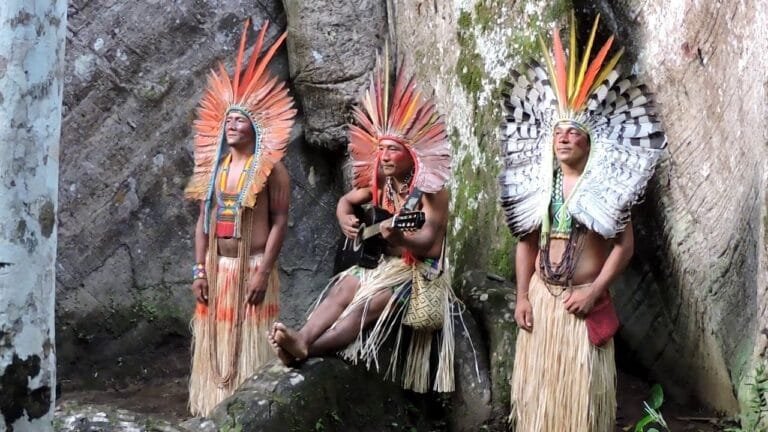
The Puyanawa’s spiritual life is closely tied to their natural environment, particularly the rainforest and its biodiversity. They believe that nature is imbued with spirits, and various of their rituals are designed to maintain harmony with these spiritual forces. They use a variety of medicinal plants and sacred snuffs in their ceremonies, which are often guided by shamans.
Atsã Puyanawa Festival: Discover the Largest Traditional Celebration of the Puyanawa Ethnic Group in Acre
The festival boosts the economy in the Juruá region and attracts tourists from several countries, as well as from different parts of Brazil. Matej Haccin, from Switzerland, is attending the event for the third time. He said he enjoyed the immersion offered by the festival so much that he made a point to participate again. The tourist arrived in Acre with a group of five people who were also eager to experience the festival. “Each time, I learn a lot about the Indigenous culture of these people from Acre, and it’s fascinating because they live so closely with nature, the forest, and have such a rich and vibrant culture,” he concluded.

Indigenous people gather in Mâncio Lima to celebrate the culture, knowledge, and spirituality of the Puyanawa, along with tourists from various regions of the world.
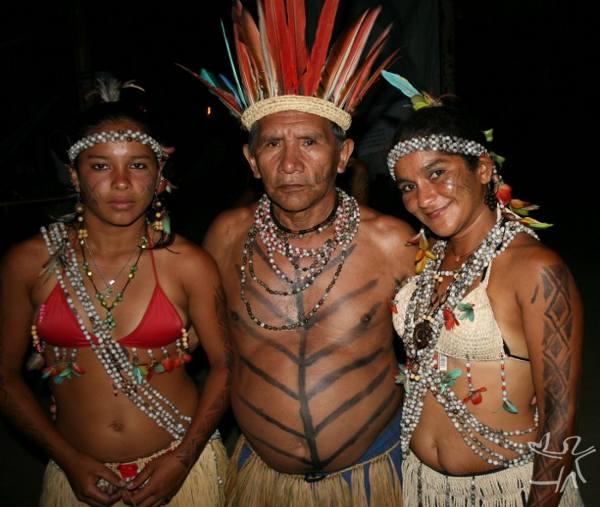
With plenty of dancing, traditional songs, typical foods, crafts, and body paintings, the Puyanawa Indigenous people host the Atsã Puyanawa Festival in Mâncio Lima, a town in the interior of Acre.

The event is considered the largest traditional celebration of the Puyanawa ethnic group. This year marks the fifth edition of the festival, taking place from July 18 to 23. The name ‘Atsã’ means cassava, which is what they celebrate, as it is the main source of income for the Indigenous community.
“It is a moment of great joy for us, showing our strength, the growth of our culture, our knowledge, spirituality, and values,” emphasized Chief Joel Puyanawa.
“As a chief, my role is to show the way, leading my people down a path that carries our history while living a life that is grounded in our values, to showcase all the knowledge being shared,” he added.

Puyanawa History
Like almost all tribes in South America, the Puyanawa suffered a lot since their first contact with non-Indians. The Puyanawa lost all of their lands. The survivors were catechized and educated in schools that forbade the expression of any trace of their culture.
In the period from 1915 to 1950, the Puyanawa were basically slaves of Colonel Mâncio Lima. The landowner of the rubber plantation forced the Puyanawa to work on their land.
After the death of the Colonel in 1950, the Puyanawa were finally freed from slavery. The process of demarcating the Puyanawa territory gave them the possibility to value their own culture once again.
In 2009, of the approximately 500 Puyanawa, only three people spoke the Puyanawa language, reflecting the severe cultural loss the tribe experienced due to decades of external pressure and forced assimilation. In recent years, however, the Puyanawa have actively worked to revitalize their language through various initiatives. Community-led efforts include language classes for younger generations, using the knowledge of elders to pass down the language orally. Schools in their villages have also begun incorporating the Puyanawa language into the curriculum, a significant step in reclaiming their linguistic heritage.
Alongside language revitalization, the Puyanawa are also reviving their cultural practices, such as traditional rituals, the use of medicinal plants, and spiritual ceremonies. These efforts to reconnect with their heritage are central to restoring the tribe’s cultural identity and ensuring that their traditions and values are passed on to future generations.
A central figure in this cultural and land reclamation movement was Mario Cordeiro de Lima, the first cacique (chief) of the Puyanawa tribe after their period of forced labor. Mario Cordeiro de Lima played a key role in the fight to demarcate Puyanawa lands, leading the struggle to restore their rights and cultural pride. Sadly, Mario passed away in 2020. His legacy continues through his son, Joel Cordeiro de Lima, who has taken up the mantle of leadership in the tribe’s ongoing efforts to protect their land and culture.