The Matsés
The Matsés Tribe: Warriors of the Amazon and Masters of Sacred Healing
The Matsés, also known as the Mayoruna, inhabit the frontier region between Brazil and Peru. Their communities are located along the Javari river basin in the far west of Brazilian Amazonia. In Brazil, they live in the Vale do Javari Indigenous Territory (IT) along with other peoples from the Pano and Katukina language families. Wars undertaken by the Matsés in the past century and the resulting incorporation of captives from other indigenous groups meant they became the largest of the northern Pano peoples.
Hidden in the remote borderlands of Peru and Brazil, the Matsés tribe has fiercely safeguarded its independence and traditions despite mounting pressures from the modern world. Renowned for their profound connection to nature, their extensive knowledge of sacred medicines like Kambo, and their vibrant cultural heritage, the Matsés are a vital part of the Amazon’s rich tapestry and a reservoir of ancient wisdom.

The Homeland of the Matsés

The Matsés people reside in one of the Amazon’s most isolated and untouched regions, straddling northern Peru and western Brazil. Their ancestral lands lie along the Javari River and its tributaries, an area teeming with extraordinary biodiversity. This territory forms part of the Vale do Javari Indigenous Territory, home to numerous tribes, including some that remain uncontacted.
Their villages are small and dispersed, often situated along riverbanks. Homes are constructed from natural materials like palm leaves, bamboo, and wood, blending seamlessly into the forest landscape. The region’s remoteness acts as both a shield and a buffer, helping the Matsés maintain their traditional ways of life. They continue to practice hunting, fishing, and foraging while nurturing a spiritual connection to the forest and its medicinal plants.
The Matsés: “Cat People” of the Amazon
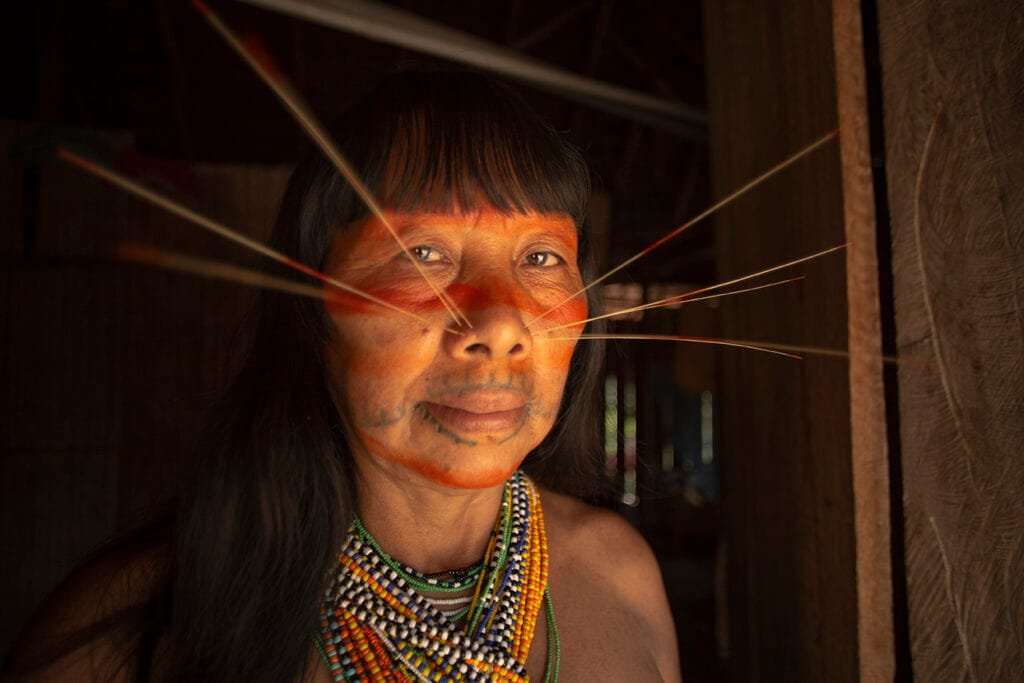
The Matsés are famously known as the “Cat People” due to their distinctive facial tattoos, which closely resemble the jaguar’s whiskers. These tattoos symbolize their spiritual bond with the jaguar, an animal revered for its strength, agility, and cunning. The designs hold deep significance, representing their role as protectors of the forest and embodying the traits of the jaguar.
Spirituality and the Sacred Forest
For the Matsés, the rainforest is a sacred and conscious realm, brimming with spirits that demand respect and care. Their spirituality is deeply tied to the jungle, where every plant, animal, and natural phenomenon has spiritual significance. As stewards of this ecosystem, the Matsés view their relationship with the forest as one of mutual care and reverence.
Dreams, visions, and spiritual practices guide their decisions, particularly in hunting and the use of medicinal plants. Shamanism holds a central role in their society, with shamans acting as healers, spiritual guides, and custodians of ancient knowledge. These medicine men wield extensive expertise in the forest’s flora and fauna, using them to heal physical ailments and address spiritual imbalances.
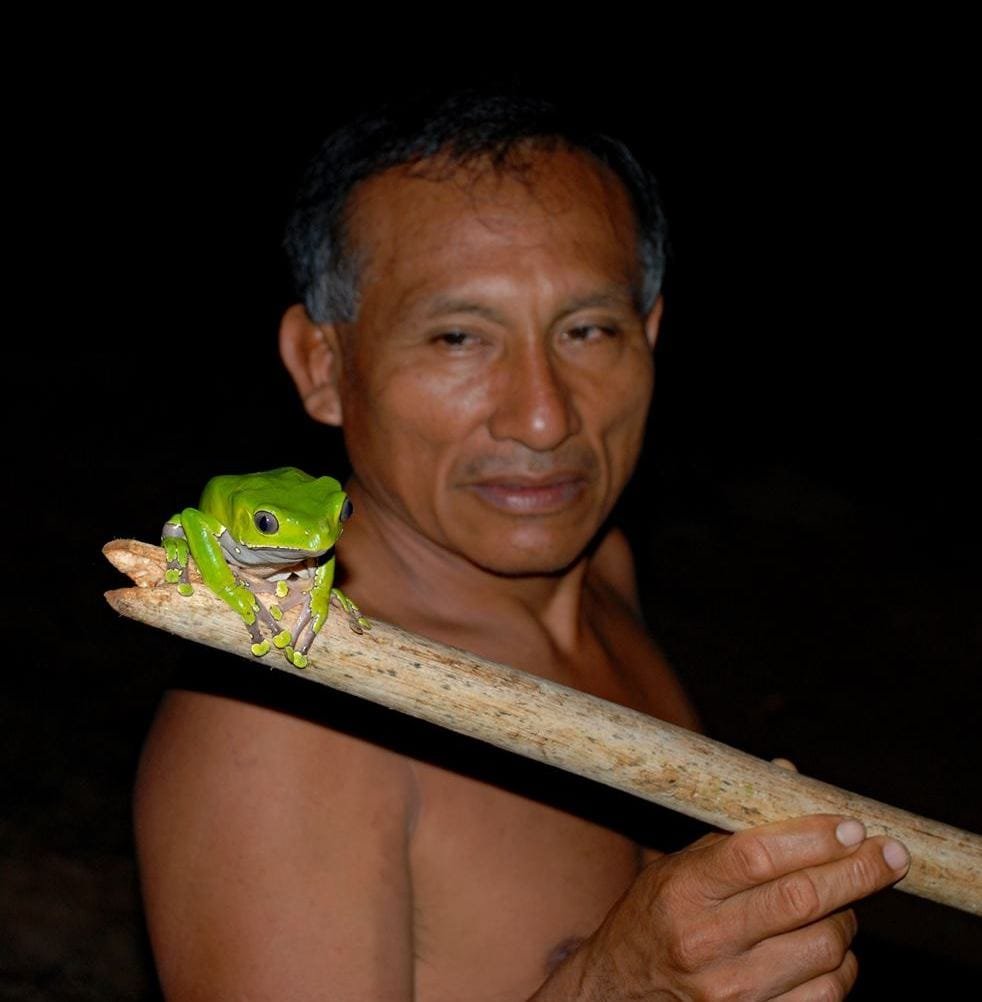
Among the sacred medicines used by the Matsés is Kambo, a powerful remedy derived from the secretion of the giant monkey frog (Phyllomedusa bicolor,). Kambo has become widely recognized for its detoxifying properties in ceremonies for cleansing and healing, bringing the Matsés’ traditional medicine to global attention.
Defending because of being attacked
Historically, the Matsés were fierce warriors, adept at defending their territory from invaders. For many years, they avoided contact with outsiders, including rubber tappers and missionaries, using their deep knowledge of the jungle and survival tactics to resist external threats. This resilience allowed them to retain their cultural identity and autonomy.
Sustained contact with the outside world began in the 1960s. This soon led to conflict, as they attacked the newcomers with bows and arrows, and kidnapped their women, as was traditional practice in Matse warfare, to assimilate them into their tribe.
The response of the Peruvian government was to bomb their villages with napalm (1964) and send the army to ‘pacify’ the area, forcing the Matses to move nearer and over the Brazilian border.
Relations gradually improved, with the acceptance by the Matse of two SIL International missionaries who learned the language, intending to translate the Bible, and encouraged them to desist from the practice of kidnapping women.
through interactions with missionaries and government officials. While this brought some modern conveniences, it also introduced diseases that significantly reduced their population. Despite these challenges, the Matsés have remained steadfast in preserving their traditional knowledge and way of life.
A Guide to Matses National Reserve
The Matses National Reserve covers an area of 4,206 km² (420,735 hectares) in Peru’s Loreto province, and forms part of a cross-border biological corridor with the Sierra del Divisor National Park in Peru and the Serra do Divisor, Alto Jurua, and Alto Tarauaca reserves in Brazil.
History of Matses National Reserve:
One of the stated objectives of the Reserve, when it was established in 2009, was to allow the indigenous people – the Matses (also sometimes known as Mayoruna) – to continue to live in their traditional manner, adapted to the jungle environment they have called home for centuries, and exploiting its resources in a sustainable manner.
The area where the Matses lived was declared a ‘communal reserve’ in 1998. But pressure from oil companies, keen to drill in the area, continued.
In 2007, the Matses leaders rejected an advance from PetroPeru to explore their territory, threatening to refuse entry, with violence if necessary, to their personnel.
This was the catalyst for the establishment of the national reserve, which was signed into law two years later. But pressures from oil companies, loggers, and farmers continued.
In 2012, in response to the granting of exploration permits to a Canadian oil company, an additional 60,059 hectares of Matses land, in the headwaters of the Chobayacu and Yaquerana rivers, was purchased and protected as a Communal Reserve.
